Humans Eat and Talk
Most people have relatives. Everybody eats.

Humans Eat and Talk
Text isn't enough, and neither's video
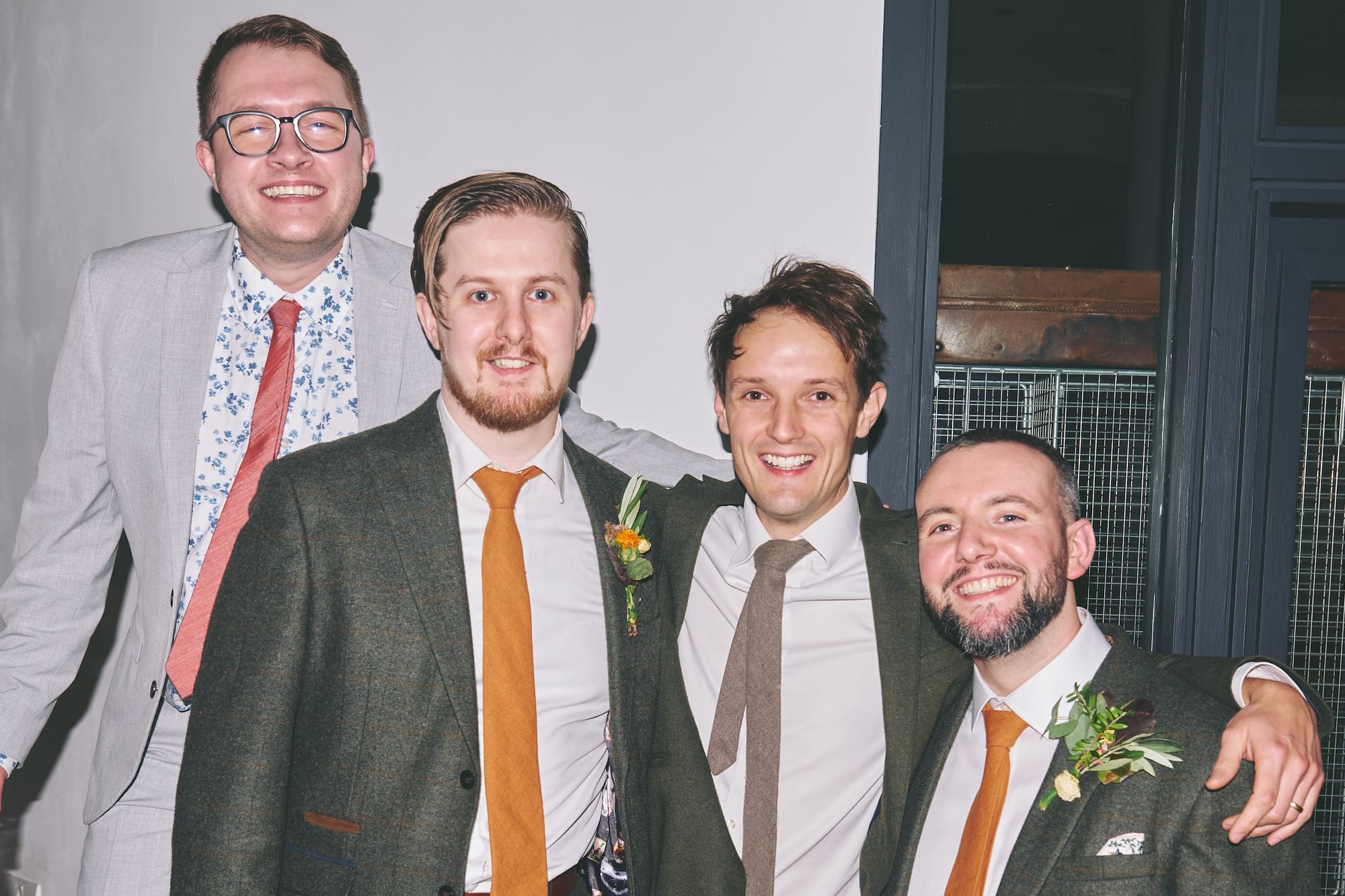
Bearwaves had a call the other day
And I was struck by how much more on the same page we were than during our more extended periods of text-only chat.
For context, we're currently working through our prototyping for additional game modes in Dave's Word Game, and we went into the call with what felt like 4 different visions for how it would all look in the end. I worried that we might struggle to find a common ground amongst all our ideas.
That worry evaporated almost immediately. Our ideas were all valued, we found ourselves landing in sync, and by the end of it, we all came away with a renewed confidence in the direction the project was headed.
What was it about our communication in that call that made me feel so much better about it all?
I'm going to write some stories about this, and you have an open invitation to read them. Yes, you. You personally. I have written your name down right here on the list of people who have been invited. It would be rude not to accept.
I don't assume the best of you
but I probably should; I interact with you because I generally enjoy you, so you likely haven't betrayed the benefit of my doubt.
In text form though, it's hard to avoid that doubt. Is the tone dismissive, confident, explorative, or welcoming?
The longer it goes without clarification, the easier it is to slide into the assumption that the tone is on the negative end of that scale.
Of course, being someone who's spent plenty of time online, I've seen the tone indicators people have tried to introduce. I think these are great in principle: pursuing a well-meaning goal of making text-based communication an easier place to navigate.
They are limited, of course, and lack nuance. Most people stick to /s and /j, more often for fear of being misunderstood and receiving backlash than for accessibility's sake.
None of the spaces I regularly interact with use them with any frequency, and I'm not sure I'm able to sufficiently interrogate my tone with every message I send either.
Best practice on this in my opinion? If somebody says something you find uncharacteristically objectionable, start by getting some clarification.
A lot of the time, a negative interaction is unnecessary, because the objectionable bit didn't mean what you originally thought.
Of course, if they clarify and it turns out they did say something objectionable, do continue with your negative interaction, it'll definitely be worth your time and energy 1.
I definitely don't always get this right, but I'm trying to be better.
As you do, I suppose.
Places get toxic
Let me tell you a story about a community on my least favourite website on the internet. At the core of this is my thesis on why Reddit can be particularly harmful: undue trust is placed in the information provided there, while its structure encourages entrenchment of ideas, regardless of the truth of them.
It started when I got a diagnosis for a rare, chronic condition. I won't be specific except to say it has the following qualities.
Keep these in mind, because they're important.
- it causes pain
- it affects very few people
- its triggers are not well understood
- it can spontaneously go away for years at a time before returning
I joined a related subreddit without really having a goal in mind. I had a full treatment plan and everything sorted with my doctor, but I suppose I just wanted to talk to other people who'd understand and could share what works for them.
Within a week, I realised I'd stumbled into a nightmarish mix of con artists and well-meaning misguiders, who often offered guides for dangerous, untested methods of self-medication, all with a disquietingly faux-empathetic tone.
The flow for someone like me goes like this.
An opening message is met with upvotes and greetings of "I'm so sorry for your suffering", as well as links to resources and advice. The outflow of supporting words is so overwhelmingly caring and empathetic that it feels insultingly infantilising.
The resources list lots of tested treatments, accepted by the medical community at large, but alongside those, uncritically list a wide range of alternative treatments.
You voice resistance to their recommendations of untested alternative medicine, and are rapidly brigaded with downvotes and a whole community's vitriol descends upon you.
You are bombarded with statements of intent to do studies (but no studies), sob stories of people unable to access healthcare (that's tragic, but not an excuse to recommend them to poison themselves), and insistence that people should be allowed to pursue whatever treatment they see fit (I agree, but that does not imply they have the right or expertise to recommend it to others).
Here's why I think that happened.
This community consists of a few types of people.
The Desperate: These people suffer from the condition. The condition sucks, the condition is difficult to treat, and treatment is not always available in dystopian countries without free healthcare 2. They are desperate and vulnerable, and they will go to any length to make the pain stop.
The Advisors: These people are core members, reply to every post, and are the main source of information. None of them are medical professionals or researchers in the field.
The Grifters: These people do not have the condition. They are here to promote a vested interest, and to that end, often push dangerous misinformation into the community. Their targets are the Desperate.
Between them, the Advisors and the Grifters solidify something called Institutional Memory: the shared understanding of "Truth" within the community, as defined by the community, not by the evidence that supports it.
This "Truth" is strongly defended by the Advisors: either you accept their "Truth", or you are driven out.
The result is that the most upvoted posts tend to be the ones that evangelise the types of prophylactic treatments accepted by the Advisors, but that are potentially dangerous, have no evidence of their efficacy, and are not recommended by any doctor. These are therefore seen by more people, and therefore further strengthen the Institutional Memory.
I feel the need to remind you that one of the features of the condition is that, at any time, with no clear reason, it can go away for years. An uncontrolled sample of 1 person saying a prophylactic treatment worked quite literally means nothing.
The community's "Truth" has been poisoned to such an extent that posts about alternative treatments dramatically outnumber posts about evidence-backed treatments.
This Is A Problem.
In this anonymous, online forum, the Grifters have gotten a foothold, and they'll have it forever, because Reddit by design has made it so the Institutional Memory of a subreddit is rigid and policed by its insiders.
In a real world conversation, dissenting opinions are much harder to suppress. People can't downvote you to make your voice quieter, and the the type of aggressive responses that these communities encourage are highly unpopular and quickly rejected when done in person.

There was a recent local election in Denmark, and we were fortunate enough to have some of the potential representatives round to answer questions and connect with us.
Rather unpleasant were the folks from the libertarian (boke 3) party that showed up. The other parties just sent their candidate, but the libertarians brought three extra supporters, who were plainly there to hide among the attendees and dominate the conversation.
On Reddit, they would have been absolutely successful.
These unpleasant jerks had their pre-prepared arguments and retorts ready, and would have flooded the replies upvoted their mates, and downvoted everybody else.
In person though... everybody got really annoyed at them trying to steal the show, and if I may be so bold, I have always had something of a skill for politely yet forcefully confronting people who misbehave in such ways.
And so, they sat quietly in the corner for the rest of the event.
Bearwaves operates primarily on text chat
It's a fact of life that all four of us are busy people, with a lot of real life responsibilities.

It just makes sense for us to work largely asynchronously, with each of us finding the time we can to pitch in our parts. We've achieved a lot as 4 fellas working full time jobs and putting our rather limited free time into these projects.
Here's the downside. I'm gonna talk about two of our text chatting habits critically here.
Bearwaves DRAMA Exposed 2026
Not really, we're all good: we've known each other for a couple of decades (ouch) and understanding one another's intended tone is second nature to us. This is a reflection, not a jab.
I am pretty scattershot when it comes to our Discord chat. I splurge a lot of ideas out there in ways that aren't very structured, and which are often about 5 steps up the ladder of reasoning. This leads to a lot of misunderstandings that only become clear later.
My tone when joking is often far too deadpan, and can lead to people assuming I have some awful opinions on things.
My tone when serious can imply far more anger than I actually feel, which I assume can make people feel uncomfortable.
Joel is almost the polar opposite, projecting a lot more certainty with his messages, almost to a fault. Disagreeing with ideas can be done with very few words, risking coming across as dismissive (which in my experience could not be further from his intention).
Between us in text chats, it can sometimes look like we have utterly incompatible views on things - and within 5 minutes on a call we're completing each others' sentences.
So what's the deal? We're not different people in those two scenarios, and even the literal words we're saying may be essentially the same.
I reckon it's all in the assumptions. There's so much less to guess about things when you're talking aloud, emoting and expressing in subtle ways.
Let's say I pitch an idea in a text chat:
"What if Dave's Word Game had a PVP mode" 4
You cannot tell what tone of voice I was using. Therefore, you could easily assume I am dead set on this. That requires a stronger response than an idea that's just casually thrown in the ring.
Here's it written differently to try and avoid that response:
"Can we think about maybe having a PVP mode in DWG? I don't know for sure if it would work and people might not like it, but maybe we can think about it?" 5
Just disgustingly apologetic. How do I pitch something in text, in a way that keeps the stakes low and relaxed? A way that indicates "I like my idea, but I'm not going to be upset if we discard or modify it".
In a spoken conversation you can signal this intention effortlessly, without actively thinking about it at all. And the conversation flows so much more productively.
There are still things that can change, of course, but the ideas we've settled on are better than any of the individual ideas we started with, and it was way clearer that there were no hard feelings for the bits we decided against.
Break Bread
I want to close on a short bit about food, and why it matters to all of this.
I see this mocked online a lot - when somebody says "food and family are really important in my culture", there's always somebody around to dunk on it, because it is obviously a universal truth across every human culture.
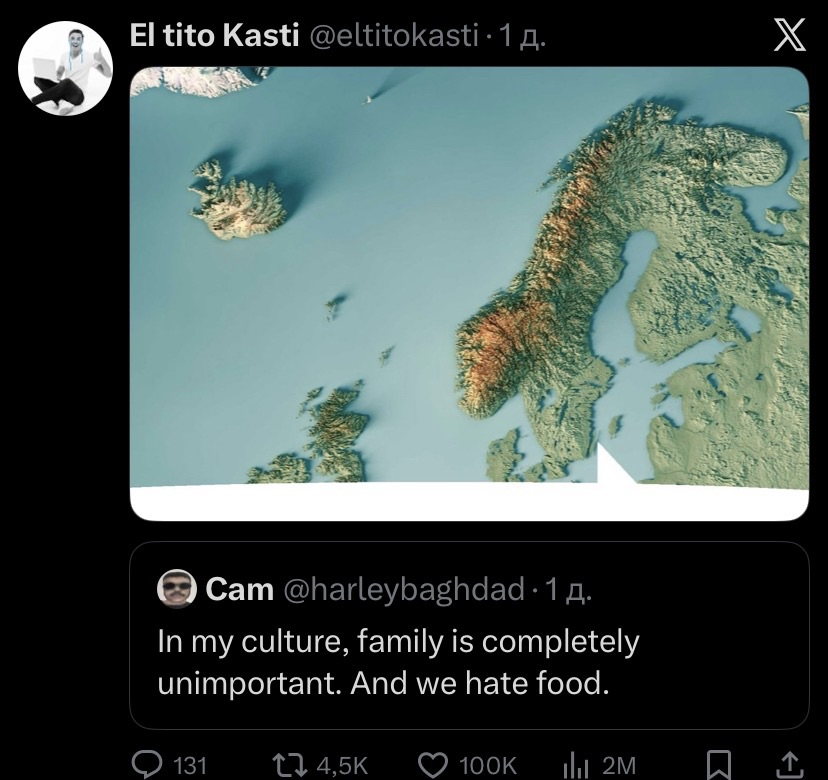
I find this mockery is missing why so many people feel the need to say such an obvious thing. It's the fact that quite a lot of people, even people who aren't overtly racist, tend to treat cultures outside their familiar circles as totally alien.
When there have been decades-long media campaigns designed to dehumanise strata of people in order to make it more palatable to exterminate them, they are compelled to demonstrate any common ground that connects them to the people who would otherwise be indifferent to their disappearance.
Most people have relatives. Everybody eats.
When you sit down to eat with people, it is instantly disarming. The parts of the culture you didn't understand start to be more familiar than you realised. The people in front of you start to reveal themselves as people, not aliens.
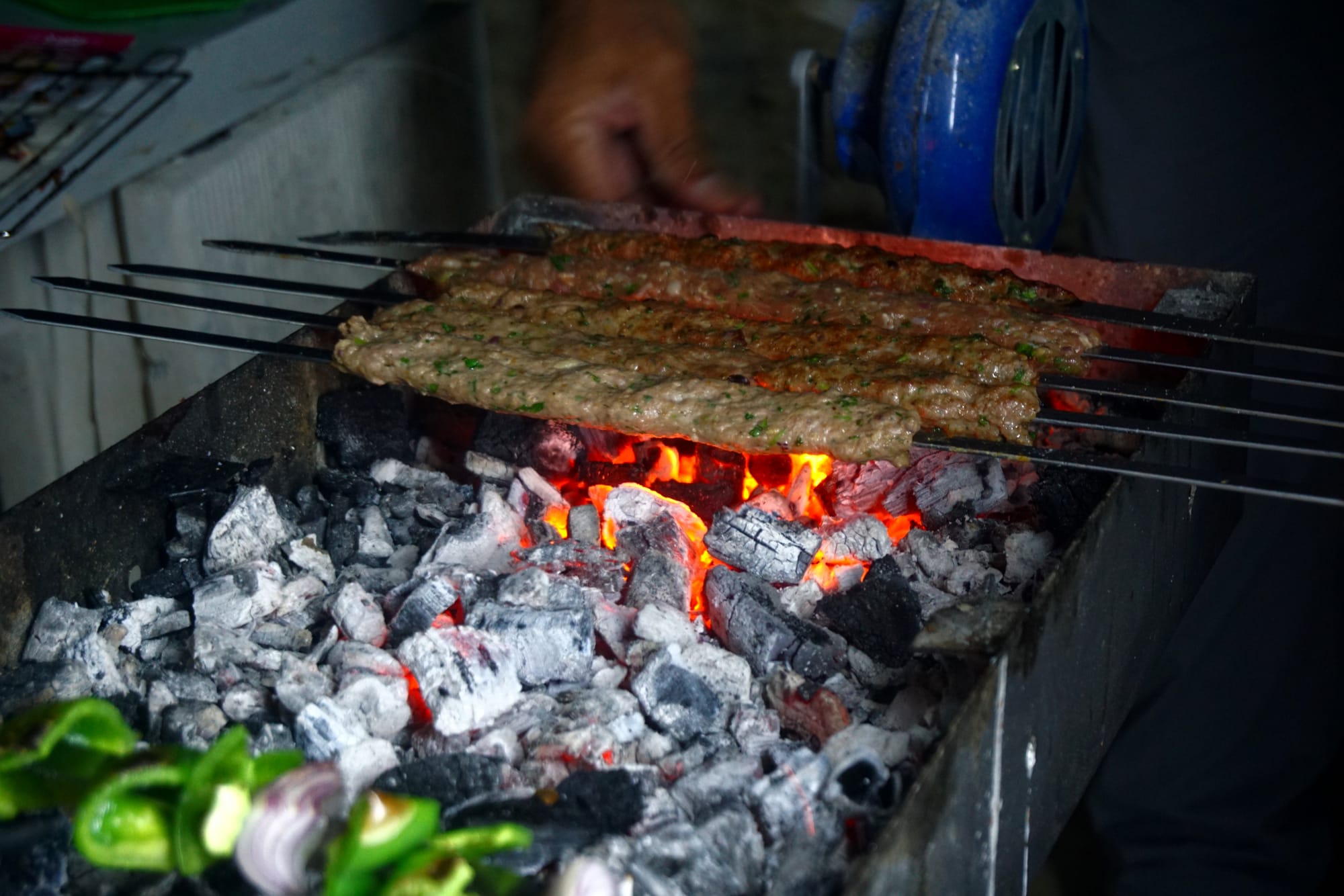
I enjoy one part of Danish work culture a lot. Lunchtime is an immutable tradition: it starts relatively early, and involves everybody, blue and white collar, all in one canteen. It's not explicitly a social affair, but it becomes one naturally. Nobody's talking about work, nobody's bringing food back to their desk. We're a multicultural bunch, but at that table, we're the same.
Bring food to your neighbours
Ramadan is coming up on (approximately) the 18th February 2026. If you have any Muslim neighbours, I'm confident they'd appreciate it a lot if you brought them a dish to enjoy after sunset when they open their fast.
As far as what to bring, if you're not able to find Halal meat, a vegetarian or pescetarian dish is ideal.
Just make sure not to use alcohol at any stage of cooking (vinegar is fine).
Say: "Ramadan Mubarak" or "Ramadan Kareem"
That's all I have to say this time, but do keep scrolling by the footnotes to find a recipe if you're wanting for dessert.
- /s
- For what it's worth, I feel incredibly grateful that I was able to rapidly gain the treatment I needed at no direct cost.
- Northern Irish for vomit
- In case it wasn't clear, this is an example, and not a feature we would dream of adding to our word game. Nightmare nightmare nightmare
- I'm serious, this idea is horrible no matter how it's phrased
Basboosa, my friends.
You simply must.
Buy this stuff
-
250ml yoghurt (of a kind that's pretty thick but pourable)
-
250ml rough semolina (not the super fine floury stuff, rava also works)
-
250ml dessicated coconut
-
250ml sugar
-
250ml vegetable oil
-
1 tbsp baking powder
-
3 eggs
-
125-250ml finely chopped nuts (not a powder, more like, tiny fragments. Almonds or cashews or a mix works)
-
1 of those small cans of condensed milk (alt: use a simple syrup instead)
-
A bunch of extra almonds, soaked in water overnight and peeled
Do this
- Preheat your oven to 125°C
- Mix all the dry stuff except your peeled almonds in the dish you're gonna bake it in, then mix in all the wet stuff except the condensed milk. Really make sure it's homogeneous. Don't make a mess
- In the oven for like 40 minutes. Could take quite a bit longer though, just keep an eye on it, all right? Your target is that it's set all the way in the middle, and the edges have browned slightly. You can poke it with a skewer to check.
- Once it's there, put it under the grill very briefly to brown the top. I AM NOT JOKING IT WILL GO VERY FAST
- Get it out of there, and use the thinnest skewer you have to poke loads of tiny holes all across the top of it. You should only pierce the top shell that's formed from browning it and no more.
- While it's still hot, pour over your tin of condensed milk, making sure it's evenly coating it. It's gonna look like a lot, but it should over time seep into the cake, leaving a shiny layer on top.
- When it's cooled, cut it into parallelograms and put an almond on each one.
- The parallelograms are not a joke, do not do squares or rectangles, cut it in parallelograms without 90° angles.